

Lightweight tailoring is the answer to a familiar warm-weather problem: how to look composed for work without building an outfit that feels heavy before midday. It relies on softer construction, breathable-looking layers, and a more relaxed relationship between jacket, shirt, and trouser. The result can move from a humid commute to a cool office and then into the evening without losing its line.
In a warm-weather work wardrobe, the point is not to imitate a cold-weather suit. It is to use proportion and material with more intention. A relaxed blazer, fluid trouser, or crisp shirt can restore structure to a wardrobe that otherwise leans soft and seasonal.
Start With Softer Construction

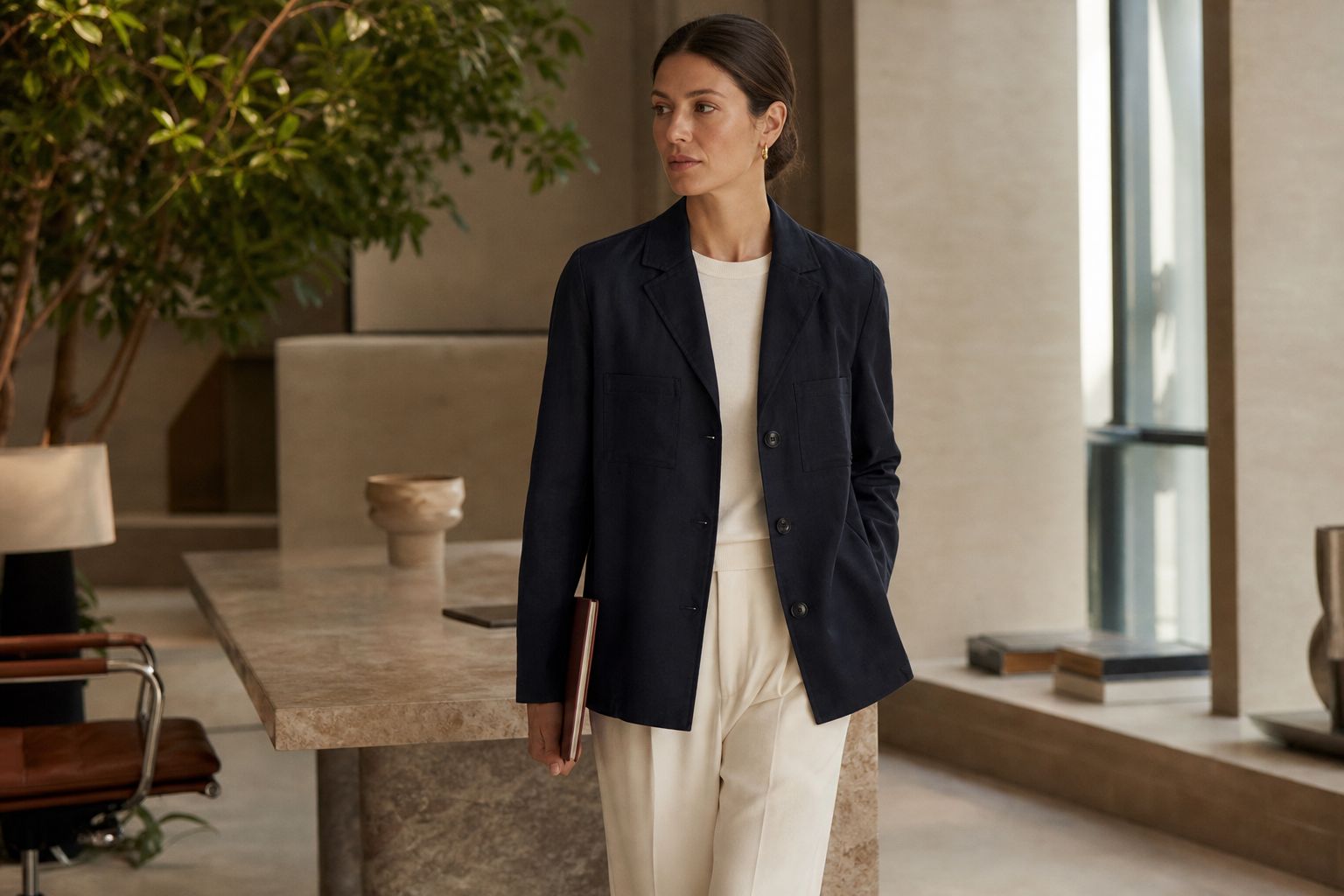
A relaxed blazer works when it reads as an option rather than armour. Choose a cut that sits cleanly at the shoulder and leaves enough room through the body for a light base layer. Worn open over a fine top, it frames the outfit instead of closing it in. That small distinction makes it useful in strongly air-conditioned interiors and easy to remove outside.
Summer office style improves when the layers have separate jobs. The shirt or top should feel comfortable on its own; the jacket should provide the finish; the trouser should hold the proportion. This way, removing one piece does not undo the outfit.
Use Proportion to Create Air

Relaxed tailoring does not mean vague tailoring. A wider trouser needs a deliberate waist and a hem that works with your usual shoes. A softer jacket benefits from a cleaner bottom half. When both pieces have movement, use a more controlled base layer to keep the silhouette legible.
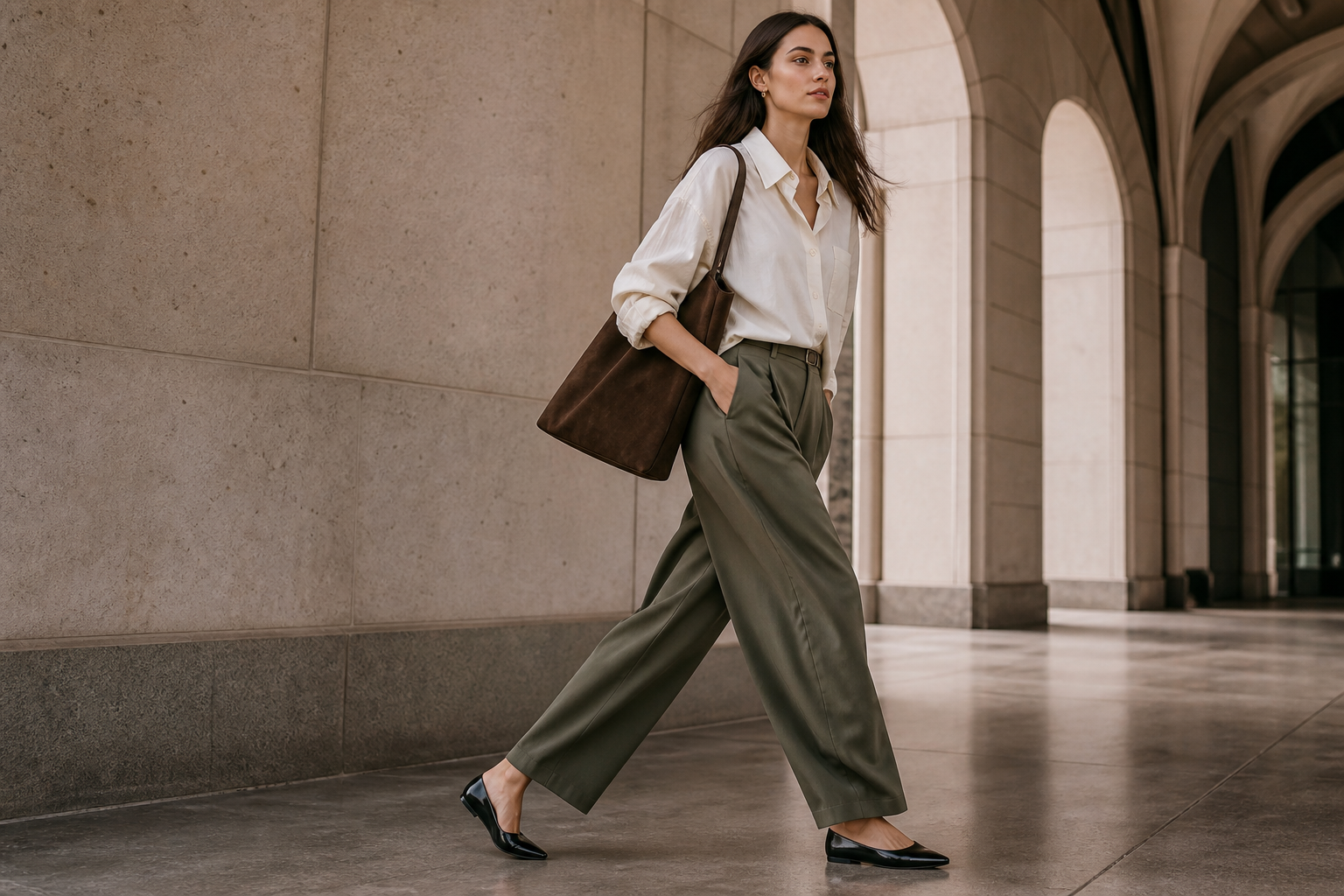
Vogue’s 2026 summer workwear edit makes a useful distinction between lightweight pieces and underdressed ones: a polished office look still needs an intentional balance of ease and appropriateness. In practice, that can mean a fluid trouser with a clean shirt, or a relaxed blazer with a low-profile flat. The clothes remain light, but the outline stays clear.
Make the Shirt Do More

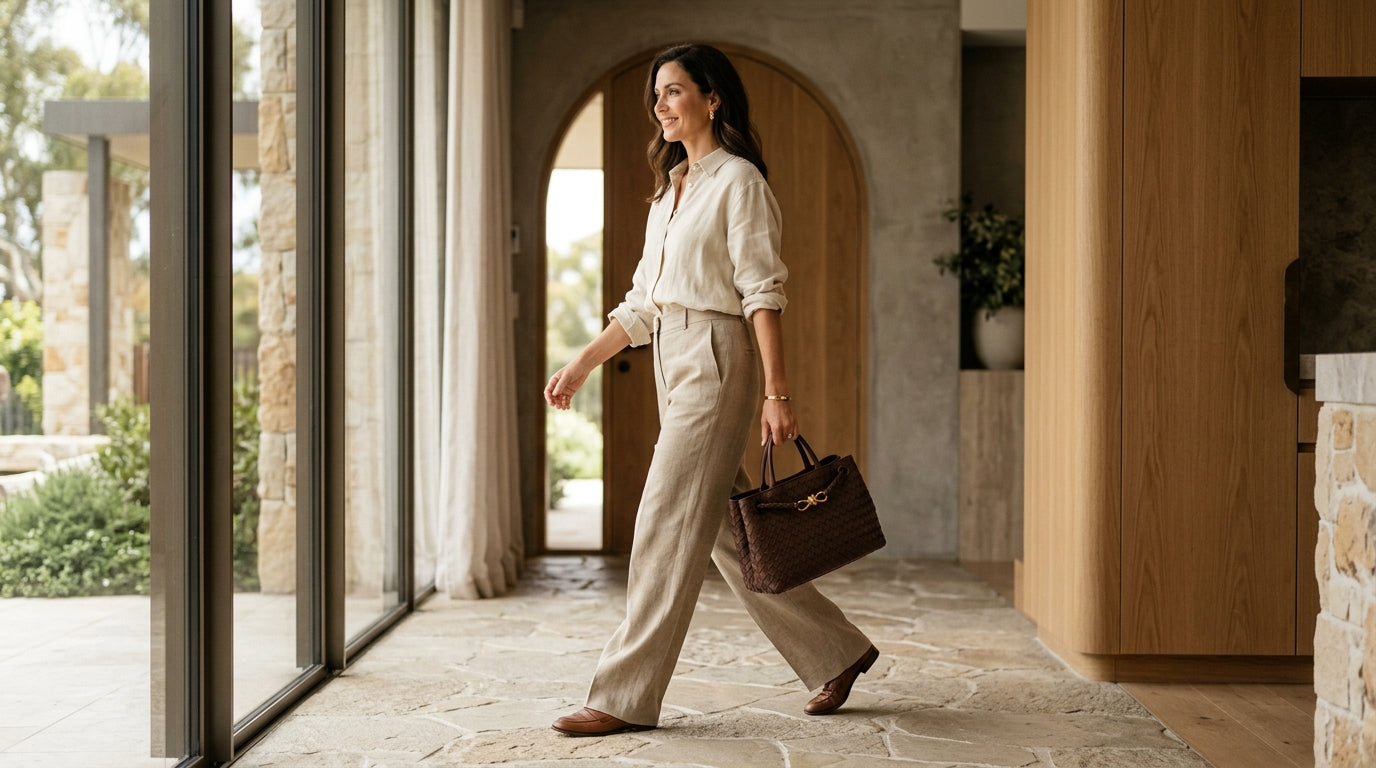
A well-chosen shirt can carry the entire look on days when a jacket feels unnecessary. A crisp collar, a measured sleeve, and a fabric with enough body to hold its shape are often more effective than extra decoration. Wear it loose over straight trousers for ease, or give the front a partial tuck when you need a stronger waistline.
Keep colour quietly directional. Parchment and warm stone feel light without becoming stark; muted olive offers depth; a restrained oxblood detail can shift the look toward evening. Explore Jil Sander for precise, minimalist wardrobe pieces, or browse women’s shirts to build the foundation first.
Finish With Refined Footwear

Polished workwear benefits from a shoe that keeps the trouser’s movement clean. Luxury flats are ideal when the hem sits near the ankle; they give the outfit a neat final note without making it formal. If the trouser is long, choose a shoe with a visible toe shape so the line does not disappear.
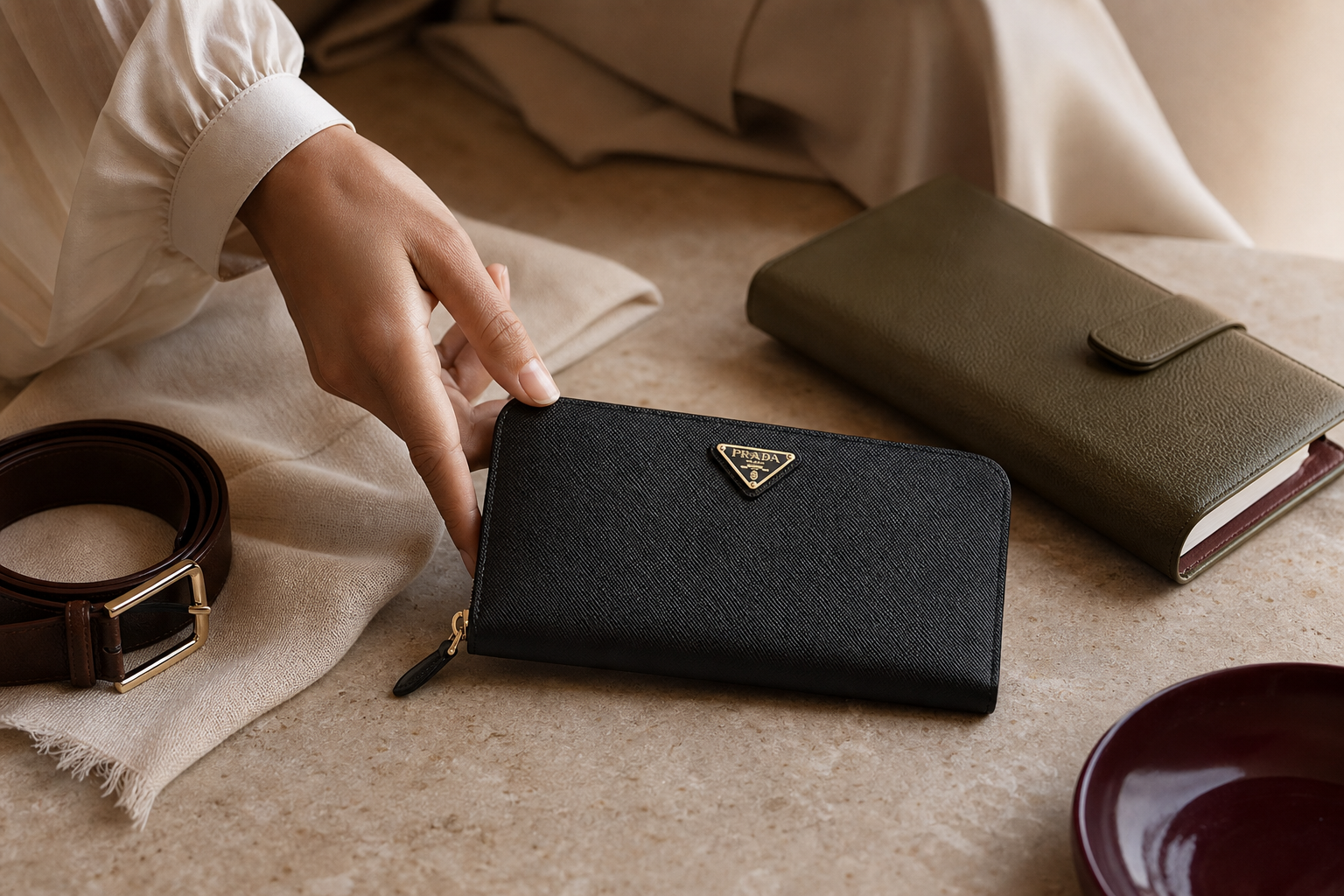
A small accessory can complete the same work. A compact bag, a belt, or a simple leather wallet creates a more intentional point of contact with the outfit. Browse the women’s bags edit for structured options, and use Prada as a starting point for shoes and leather goods with a sharper finish.
Carry One Layer Through the Day

The useful test for lightweight tailoring is whether it can adapt without a costume change. In the morning, wear the blazer with its matching trouser or a fluid skirt. At lunch, remove it and rely on the shirt. For evening, return the jacket to the shoulders, add a more defined shoe or compact bag, and let the palette do the work.
This approach keeps the wardrobe practical in warm conditions while still responding to new-season direction. You are adding clarity, not weight; definition, not formality.
Fabric deserves the same attention as cut. Look for materials that have enough body to keep a clean shoulder and trouser line, but do not rely on an overly dense finish for structure. In a warm office routine, a fabric that drapes well, recovers after sitting, and layers comfortably over a light base will prove more useful than a jacket that only looks good standing still. This is how lightweight tailoring keeps its composure through the full day.
It also helps to decide which element carries the tailored message. If the blazer is soft and relaxed, keep the trouser and shoe simple. If the trousers are wide and fluid, use a more precise shirt collar or a compact bag to give the look a centre. That balance is less about rules than visual editing: one clear shape is memorable; several competing shapes can make the outfit feel heavier than it is.
For repeat dressing, create two or three combinations before adding more pieces. A blazer that works with one pair of trousers, a shirt that works with both, and a flat that supports the whole group will take you further than a collection of isolated items. The result is polished workwear with a calmer decision process each morning.
A final check before leaving home is useful: can the blazer come off without leaving the outfit unfinished, and can the trousers and shirt move easily between sitting and standing? If the answer is yes, the look has the adaptability that makes lightweight tailoring worth repeating. Add jewellery sparingly, keep the bag proportionate, and let the clean relationship between the pieces remain the strongest statement.
That restraint is what makes the formula feel current. Rather than accumulating layers, it relies on a considered shoulder, an intentional hem, and a palette with enough depth to carry the look from daylight into evening.
What to Explore at MAYFEYR
Build the formula from a soft blazer, a fluid trouser, and a shirt that stands on its own. Add a compact flat when you want the look to remain mobile from the first meeting to the last plan.


Final Takeaway
Lightweight tailoring is most convincing when every piece can breathe independently. Let the blazer provide the option, the trouser provide movement, and the shirt provide polish. Then use footwear and leather accessories to make the outfit feel complete rather than overworked.
FAQ
What is the easiest way to wear lightweight tailoring to work?
Start with a relaxed blazer, a clean shirt or fine top, and a fluid trouser. Keep the colours tonal and choose a low-profile shoe to maintain an easy line.
How can polished workwear feel comfortable in warm weather?
Use fewer, more purposeful layers. Choose a shirt that works alone, a jacket that can come off easily, and trousers with room to move.

Share:
Why Is Copenhagen Fashion Week So Influential? The Complete Breakdown
How Small Leather Accessories Can Refine Your Outfit